
Sciatica
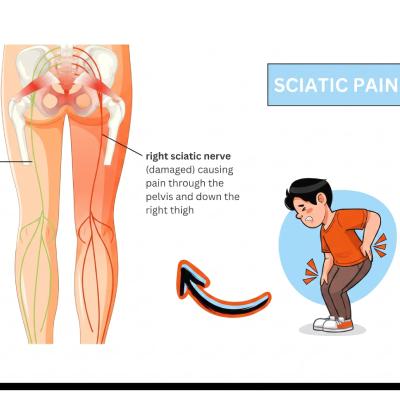
Sciatica is pain caused by irritation or compression of your sciatic nerve. You can feel it in your lower back, butt and leg. It’s a common condition that may cause pain, numbness or tingling.
Sciatica symptoms can affect your lower back, butt and legs — pressure on the spinal cord or nerves is often the cause. Sciatica is nerve pain from an injury or irritation to your sciatic nerve, and in addition to pain, it can involve tingling or numbness in your back or butt that may radiate down your leg. You may also feel symptoms in your feet or toes. Sciatica is very common — many adults will experience it at some point in their lives.
Symptoms
You may feel sciatica pain in your lower back, butt or legs. Symptoms range from mild to severe and may include:
- Pain — a burning or electric shock feeling that shoots down one leg, and may get worse when you cough, sneeze, bend or lift your legs while lying on your back.
- Numbness.
- Tingling (pins and needles) feeling.
- Muscle weakness.
- Loss of bladder control.
- Loss of bowel control.
What Causes Sciatica?
Sciatica happens when something pinches, presses on or irritates your sciatic nerve or its nerve root. It can also happen when conditions affect the group of nerves in your lower back that form the sciatic nerve. Conditions that can cause sciatic nerve pain include:
- Herniated or slipped discs pressing against the nerve.
- Degenerative disc conditions associated with ageing.
- Spinal misalignment or narrowing of the spinal canal.
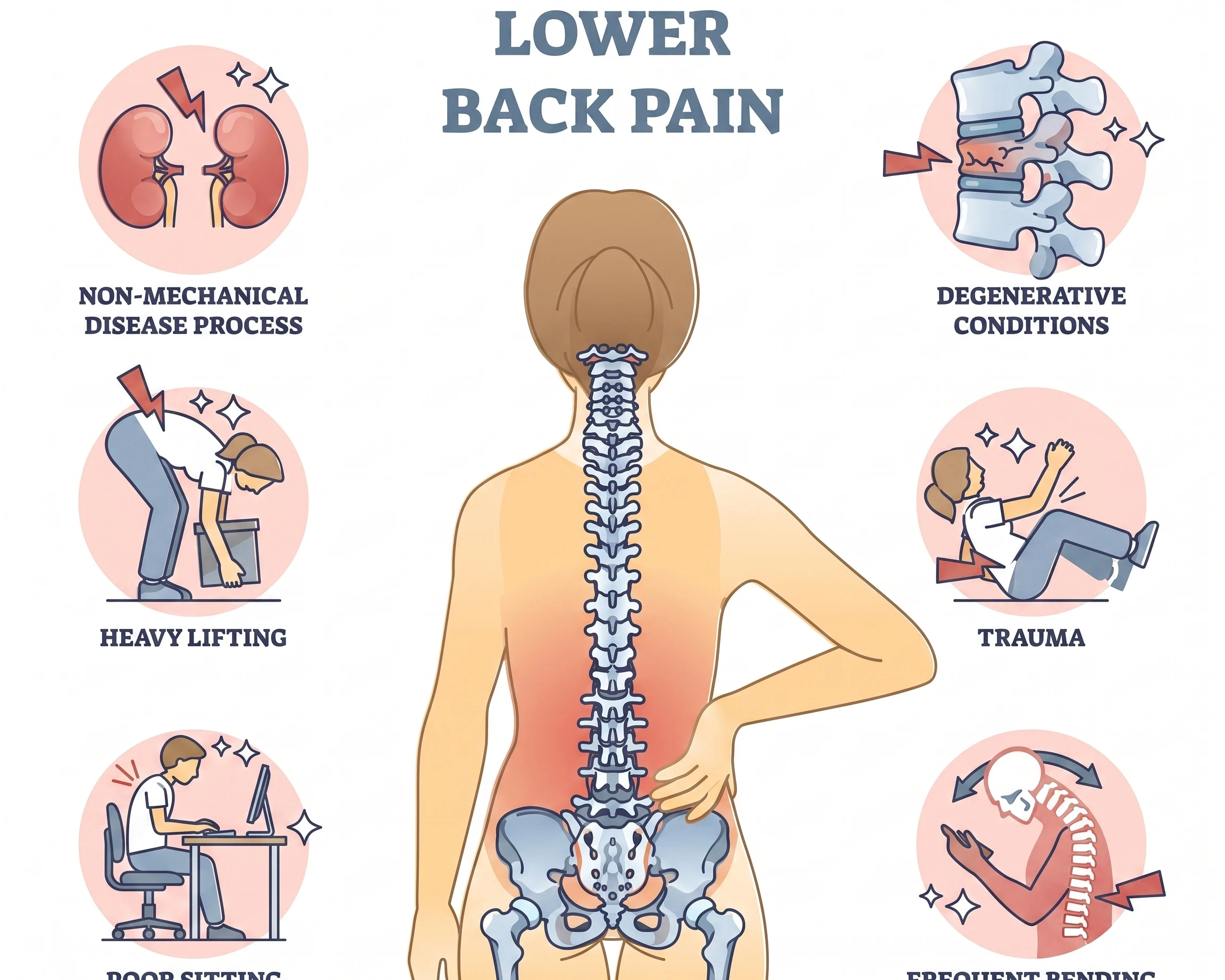
- Prolonged sitting or incorrect posture.
- Muscle tightness, especially in the lower back and hips.
- Tumors, cysts or other growths.
Risk Factors
Certain factors may increase your risk. These include:
- Injuries.
- Aging and wear on the spine.
- Obesity.
- Weak core muscles.
- Your job or daily activities.
- Poor posture or lifting form.
- Type 2 diabetes.
- Low physical activity.
- Tobacco use.
Prevention
- Use good posture — sit, stand, lift and sleep in ways that support your back.
- Avoid tobacco, since nicotine can reduce blood flow and weaken your spine.
- Maintain a healthy weight, since extra weight can put more strain on your lower back.
- Stay active — regular movement, stretching and core-strength exercises help support your spine.
- Prevent falls — wear supportive shoes and keep walkways clear and well-lit.
- Let your body recover — don’t push through back pain, and choose low-impact activities like walking, swimming or yoga when needed.
Classical Homeopathy and Sciatica
Homeopathic treatment for sciatica is personalized — this precise approach makes treatment more effective.
By treating the whole person, not just the painful nerve, homeopathy supports thorough healing that lasts.
Homeopathy for sciatica does more than ease symptoms — it targets the root cause of nerve irritation and helps fix it from within.
The process starts with a detailed look at your symptoms, daily habits, stress, and overall health, and then a personalized remedy is chosen.
Over time, this approach helps reduce nerve inflammation, restore movement, and build a foundation for lasting recovery.
Patients often find benefits beyond pain relief, such as improved strength, greater flexibility, and an overall sense of ease.
Other Joint complaints Treatments
Explore related homeopathic services under Joint complaints.